How to Puchcase Real Estate in Japan While Living Overseas

We have seen a growing number of inquiries from people living abroad who want to purchase real estate located in Japan. The basic flow of the transaction is the same as for a purchase made domestically, but there are a few points that require special attention. In this article, we outline the key considerations that overseas residents should keep in mind when purchasing property in Japan.
The Role of the Real Estate Agent

Support throughout the transaction—searching for a property, investigating its condition, and negotiating contract terms—is generally handled by a real estate agent (fudosan chukai gyosha). In Japan, no one may operate as a real estate agent without holding a license under the Building Lots and Buildings Transaction Business Act (which requires the presence of a licensed real estate transaction specialist, a national qualification). For this reason, most licensed agents can generally be trusted.

That said, even among licensed agents, some act in bad faith or engage in fraudulent practices. Since overseas residents cannot easily verify the situation in Japan firsthand, if you feel uneasy, it is worth considering a large, well-established agency—for example, one listed on a stock exchange. The credibility of the organization as a whole reduces the risk that the safety of the transaction depends solely on the qualities of a single individual agent.

On the other hand, for relatively low-priced properties—such as an old vacation home in a rural area—large agencies often do not actively handle such listings in the first place. For these properties, it may be more reassuring to work with a local agency that has been operating in that area for many years, as such agencies tend to be more familiar with the actual condition of the property and the surrounding circumstances.

The Biggest Hurdle: Payment of the Purchase Price

For overseas residents purchasing real estate in Japan, the single biggest practical hurdle is the payment of the purchase price.

In a typical Japanese real estate transaction, settlement proceeds as follows:

  1. An earnest money deposit (tetsukekin) is paid at the time the contract is signed.
  2. Once preparations for registration are complete, the balance of the purchase price is paid.
  3. Simultaneously with payment of the balance, the buyer receives the title deed (registration identification information) from the seller.

For a domestic transaction, a bank transfer allows the funds to be confirmed as received on the same day, which makes this “simultaneous performance” easy to achieve. With an international wire transfer, however, it is common for the funds to take several days to arrive, so same-day confirmation of receipt is not possible. This creates a real risk: the buyer may have already sent the funds but cannot obtain the title deed until receipt is confirmed, or the seller may be unwilling to hand over the title deed before the funds have actually arrived.

In addition, escrow services are not yet widely used in Japan. In some countries, such as the United States, escrow is a standard part of real estate transactions, in which a neutral third party holds the funds temporarily and releases them to the seller only once the agreed conditions are satisfied. Japan currently lacks this kind of institutional framework.

Using a Lawyer’s Trust Account

One way to address this timing gap is to make use of a lawyer’s trust account (client account).

Where a lawyer has been retained to review the sale and purchase agreement, or to act as agent in the sale and purchase procedure itself, the buyer can transfer funds into the lawyer’s trust account in advance, and the lawyer can then transfer the funds to the seller’s account on the settlement date. This arrangement allows:

  • The buyer to prepare and remit funds well before the settlement date; and
  • The seller to hand over the title deed with confidence that the transfer from the lawyer’s account will actually be made on the settlement date.

In this way, the arrangement can achieve a function similar to an escrow arrangement, even without a dedicated escrow service.

It is important to note that a lawyer cannot be retained solely for the purpose of moving funds. Use of a trust account presupposes that the lawyer has been retained to perform substantive legal work—such as reviewing the contract or acting as agent in the transaction.

Summary

When purchasing real estate in Japan as an overseas resident, the key points are:

  • Choosing between a large agency and a local, community-based agency depending on the price range and nature of the property;
  • Understanding the structural problem created by the timing gap in international wire transfers at settlement; and
  • Reducing settlement risk by retaining a lawyer to review the contract or act as agent in the transaction, and making use of the lawyer’s trust account.

If you are considering purchasing real estate in Japan from overseas, consulting a lawyer at an early stage—so that the settlement method is planned as part of the overall transaction—can help ensure the process goes smoothly and safely.
Inquiries Regarding Visas and Status of Residence | We do not handle Visa cases.

Thank you for visiting our website. We are a law firm in Japan, and we often receive inquiries from those looking for a Japanese lawer to assist with visa and immigration matters.

Please be advised that our firm does not handle cases related to visas or status of residence in Japan.

For assistance with these matters, we recommend searching online for terms such as “visa lawyer Japan.” This should provide you with a list of qualified professionals who specialize in this area of law.

Additionally, if you are considering starting a business in Japan and require assistance with visa applications in that context, we can recommend the Kawasaki One-Stop Business Startup Center. We collaborate with this organization, and they are equipped to handle visa consultations for entrepreneurs. To request a consultation, please visit their website directly at https://onestop-kawasaki.com/.

We appreciate your understanding, and hope this information is helpful for you.

New Criminalization of Cannabis Use: Warning for Foreign Residents and Tourists

Recently (March 2025) in Japan, there was the first arrest case for the use of cannabis under the newly revised Cannabis Control Act (which came effect from December 2024).

Key Point of the Legal Amendment: Criminalization of Use

Previously, under Japan’s Cannabis Control Act, while the “possession” of cannabis was punishable, the act of “using” it was not criminalized (unlike stimulants, etc.). However, due to the recent legal revision, the “use” of cannabis itself is now clearly defined as a criminal offense and subject to punishment.

Penalties for the crime of using cannabis in Japan:

Simple use: imprisonment for up to 7 years
For profit: imprisonment for between 1 and 10 years, or a fine of up to 3 million yen, or both, depending on the circumstances of the case

Warning for Foreign Residents, Especially Young People

In recent years, there has been an increasing trend of foreign nationals, particularly young Americans residing in Japan, being arrested for purchasing or using cannabis within the country, potentially influenced by different legal standards or social acceptance in their home countries or states. Before this amendment, if cannabis (as physical evidence of possession) was not found during a police investigation or questioning, prosecution or arrest did not occur.

However, this has now changed. Following the legal revision, even if an individual is not found possessing cannabis at the time of investigation, if past use is confirmed through scientific methods such as urine analysis, they can be arrested, detained, and potentially face criminal trial for the offense of using cannabis.

Severe Consequences of a Drug Conviction

Receiving a guilty verdict for a drug offense in Japan (including cannabis, MDMA, stimulants, etc.) carries extremely serious consequences beyond the imposed criminal sentence, particularly under immigration law. Specifically, it typically results in deportation (forced removal) from Japan and, as a general rule, a permanent ban on re-entering the country in the future.

For individuals who have already established a life in Japan, with jobs, families, and community ties, the impact of such consequences is immeasurable, potentially overturning their entire lives. Furthermore, this extends beyond personal repercussions, causing significant trouble and distress to family members, friends, employers, and others in their social network.

Therefore, we urge people to understand that regulations concerning illegal drugs, including cannabis, are strict in Japan, potentially more so than in some other countries. This applies equally to other synthetic drugs like MDMA. It is imperative to accurately understand Japanese laws and strongly reaffirm your commitment to having absolutely no involvement with any illegal drugs while in Japan. A casual attitude or misunderstanding could lead to irreversible consequences.

Drug offenses profoundly impact your future and the lives of those around you. We strongly encourage compliance with Japanese laws and hope you lead a safe and healthy life in Japan.

New Year’s Greeting for 2024|Visiting the New Kawasaki City Hall

New Year’s Greetings

Thank you very much for your support during the past year. We look forward to working with you again this year.

Promoting International Practice

At Sumikawa Law Office (Kawasaki City, Kanagawa Prefecture), all of our attorneys and staffs are able to communicate in English. Taking advantage of this, we will continue to provide support to our clients in Japan and abroad for legal services that require English language. In particular, we have received an increasing number of inquiries over the past few years regarding support for inheritance procedures in the U.S. In addition to providing support for individual cases in cooperation with attorneys in various states in the U.S., we plan to strengthen our information dissemination efforts.

We are also receiving an increasing number of inquiries from small and medium-sized companies regarding international contracts. We hope that companies that are about to start international transactions, as well as those that are already engaged in international transactions but have not yet received advice from an attorney, will consult with attorneys.

Promotion of SDGs

Our law firm will continue to actively develop initiatives for the SDGs this year.

In 2024, as part of our focus on gender equality, we will strengthen cooperation with lawyers from other firms and begin activities to train young and mid-career lawyers who can be candidates for outside directors in Kanagawa Prefecture. Sustainability, as set forth by the SDGs, is an extremely important theme for companies. In order to address this important issue, our firm aims to train lawyers who can support local companies in the future. We will work to ensure that attorneys with expertise in sustainability issues can address the challenges facing businesses and contribute to the sustainability of the entire region.

We will also continue to focus on creating a framework for supporting business succession in collaboration with other professionals in the region. If a company goes out of business at the same time as its representative retires, not only will the services provided cease, but the employees will also lose their jobs, which will have a significant impact on the local community. It is a critical issue for the community that companies plan and prepare for business succession at the earliest possible stage. If you have any concerns bout business succession, we encourage you to consult with an attorney in your area.

In addition, we will continue to support other activities to revitalize the local community, especially in Kawasaki City, where our firm is located, such as sponsoring local exchange activities and supporting a children’s cafeteria.


Tour of the New City Hall of Kawasaki City

At the end of last year, we toured the new Kawasaki City Hall, which was completed last year (2023). 25th floor observation deck is open to visitors free of charge. It is a different world that can be quickly ascended by elevator, and I felt more refreshed than I expected. If you haven’t been there yet, why not visit during the New Year when the air is clean?

Kawasaki City Website
https://www.city.kawasaki.jp/170/page/0000153797.html

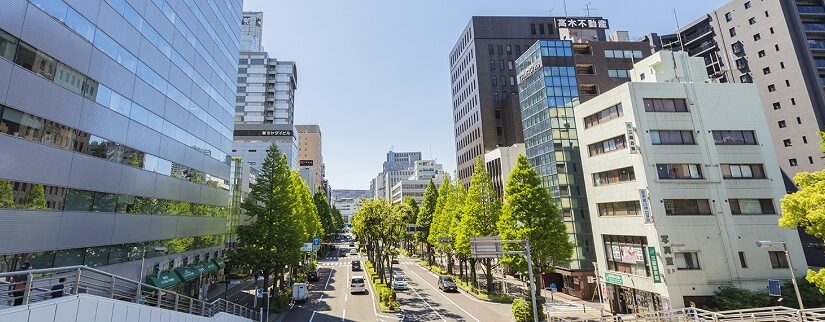
Sumikawa Law Office is located across the street from the new Kawasaki City Hall (on the second floor of the Miyadai Building shown in the photo below). When you visit our office, consider taking 30 minutes and stop by the City Hall observation deck.

Kawasaki City Hall Observation Deck

Explanation of Terms Concerning Civil Rehabilitation Proceedings in Japan (Tentative Version)

民事再生 MINJI SAISEI

Civil Rehabilitation proceedings

A legal procedure taken by a company that has difficulty repaying its debts in order to avoid bankruptcy by reducing the amount of existing debts. The company itself continues to operate as before.

民事再生申立日 MINJI SAISEI MOUSHITATE-BI 

Date of petition for Civil Rehabilitation

The date the petitioning attorney of the debtor company files the petition for civil rehabilitation with the court. (March 2nd for this case)

民事再生手続開始決定日 MINJI SAISEI TETSUZUKI KAISHI-KETTEI-BI

Date of court order for commencement of Civil Rehabilitation proceedings

The date on which the court receiving the petition for civil rehabilitation formally initiates the legal proceedings for civil rehabilitation (March 7th for this case)

再生債権 SAISEI SAIKEN

Rehabilitation claim

Claims arising prior to the date of order of commencement of civil rehabilitation proceedings.

共益債権 KYOUEKI SAIKEN

Common benefit claim

Claims arising after the date of the order of commencement of civil rehabilitation proceedings. Since it will be impossible for the company to operate if this is not repaid, it is treated like a normal transaction, and the company is obligated to repay it as promised.

共益債権化 KYOUEKI SAIKEN-KA

Changing from Rehabilitation claim to Common Benefit claim

The court, upon the company’s petition, shall convert rehabilitation claims that accrued between the date of petition and the date of commencement order to common benefit claims.